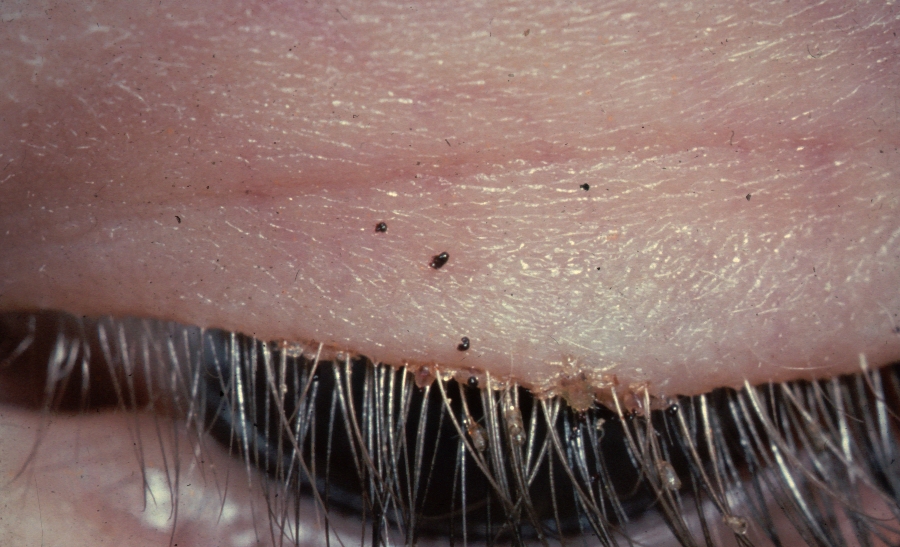
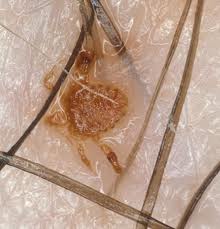
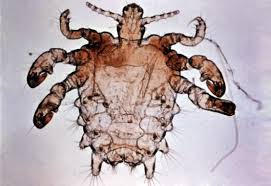
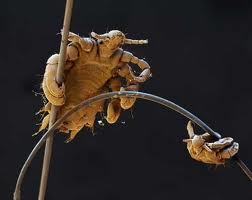
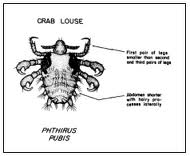
Pubic lice are known as Phthirus pubisand and they are also called "crabs" because of their crab-like appearance under a microscope, they are six-legged parasitic insects that most commonly infest hair in the pubic area and drink blood, but they could be found in other parts of the body with hair like the beard, eyebrows or eyelashes.
Appearance:
Pubic lice could be found in three different forms:
- Egg: they are called nits and they are oval, yellow to white, pubic lice nits take 6-10 days to hatch. They are found attached to the hair shaft.
- Nymph: a nymph looks like an adult pubic louse but it is smaller. Pubic lice nymphs take 2-3 weeks after hatching to mature into adults capable of reproducing
- Adult: Pubic lice have six legs; their two front legs are very large and look like the pincher claws of a crab. Pubic lice are tan to grayish-white in color. If the louse falls off a person, it dies within 1-2 days.

Symptoms:
They could appear 2-4 weeks after the lice is in your pubic hair.
- Itchiness, become worse at night, when the lice become active and bury their heads inside pubic hair follicles to feed on a person's blood.
- Lice bites can also cause the infested area to become inflamed and discolored because of a reaction to the proteins in the saliva of the lice.
- Skin reaction that causes skin to turn bluish-gray in color.
- Sores in the genital area due to bites and scratching.
- Visible nits (lice eggs) or crawling lice.
In most cases, pubic lice are transmitted sexually from the pubic hair of one person to another. In young children, pubic lice may also be a cause of blepharitis (irritation or infection of the eyelids).